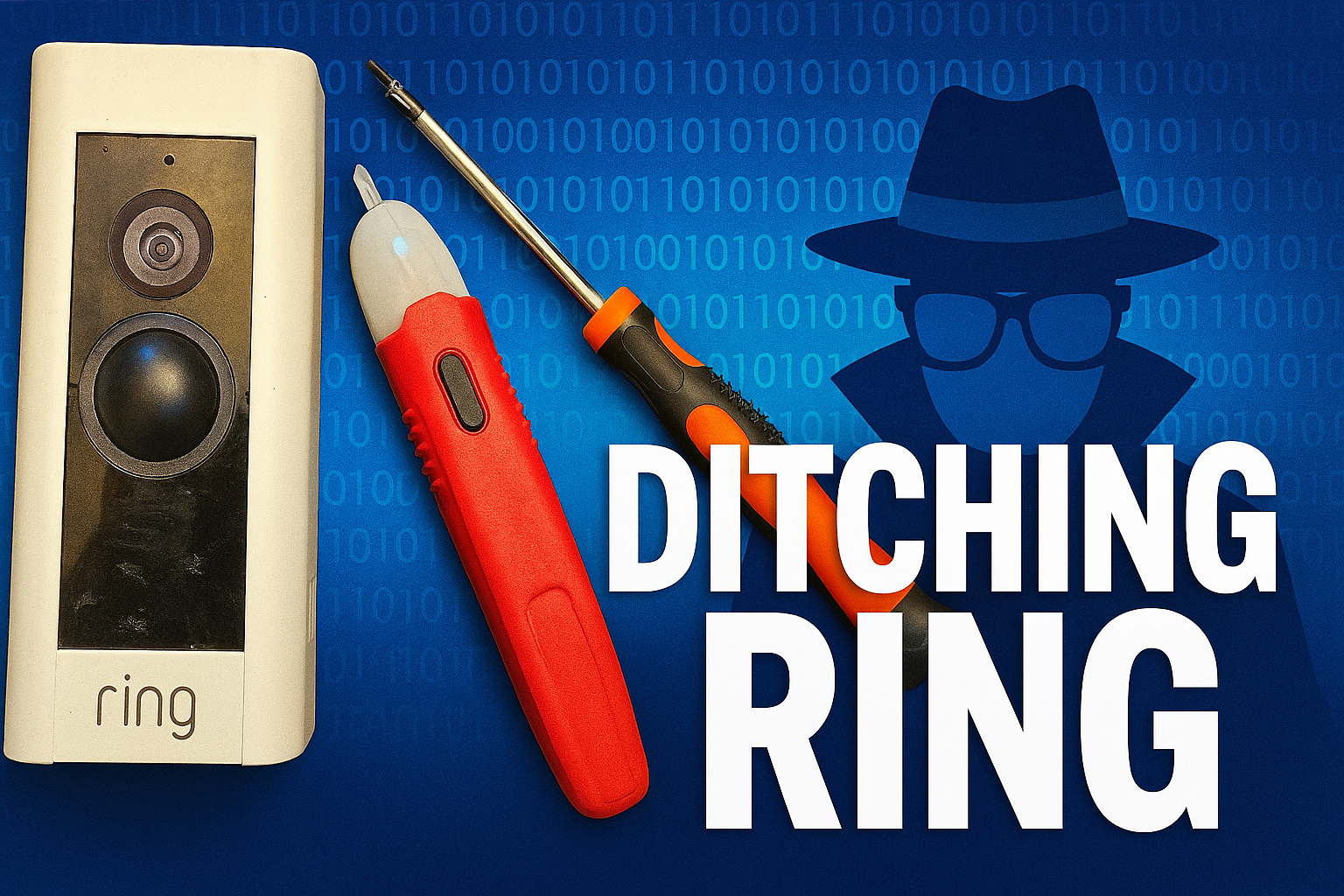
One Less Node in the Surveillance State
Ring has actively courted and catered their video camera services to police departments. Most Ring devices store their captured video in the cloud. Police departments don’t need a warrant to view these videos; they simply ask Ring. Government agencies like ICE are not allowed to access these videos without a warrant. But, in practice, they just ask their friends at the local police department to get it for them. These agencies then have unfettered access to all of these videos, not just specific videos that might pertain to an investigation.
This trove of data can be poured into bigger systems that aggregate data points to build profiles of citizen’s lives. Most of these citizens haven’t done anything to warrant an investigation. This type of data analysis is powerful enough on its own, but Ring is making it even easier with on-device facial recognition and a “Search Party” feature. The Ring network of cameras now allows you to push the search and data aggregation into the live feeds themselves.
If you bought a Ring camera for your home, you were probably thinking more about a convenient way to check for packages or to uncover the identity to ding-dong-ditchers. I’m guessing that supporting a network of government mass surveillance wasn’t the primary selling point for most customers. But that is what we have signed up for. We have opted in to self-surveillance.
There are certainly valid reasons why you would want law enforcement to have access to video data, but there need to be checks and transparency. The current system is too easy. When constant surveillance is possible, we change our behaviors. If we cannot expect privacy, we cannot expect freedom.
There are many types of data collection that we cannot easily escape: cell phone records, GPS location, purchase history, etc. It can be easy to give up hope for any privacy. But we have a choice not to voluntarily give up more of our and our neighbors privacy when we have other choices. Buying devices that share and sell our personal data is a choice. There are many home cameras that store videos locally and don’t directly share them to law enforcement as a surveillance service. It’s your choice as a consumer. It may seem small, but companies want your business. If consumers direct their dollars to privacy respect products, that starts a shift in attitudes that can have cascading effects.
Privacy is critical to a free and democratic society. Right now, these tools are supporting a right-wing regime, but they can just as well support left-wing authoritarianism. The platform will serve whoever has power. So, if you believe in privacy, freedom, and the right to free speech; consider becoming one less node in the state’s surveillance network.