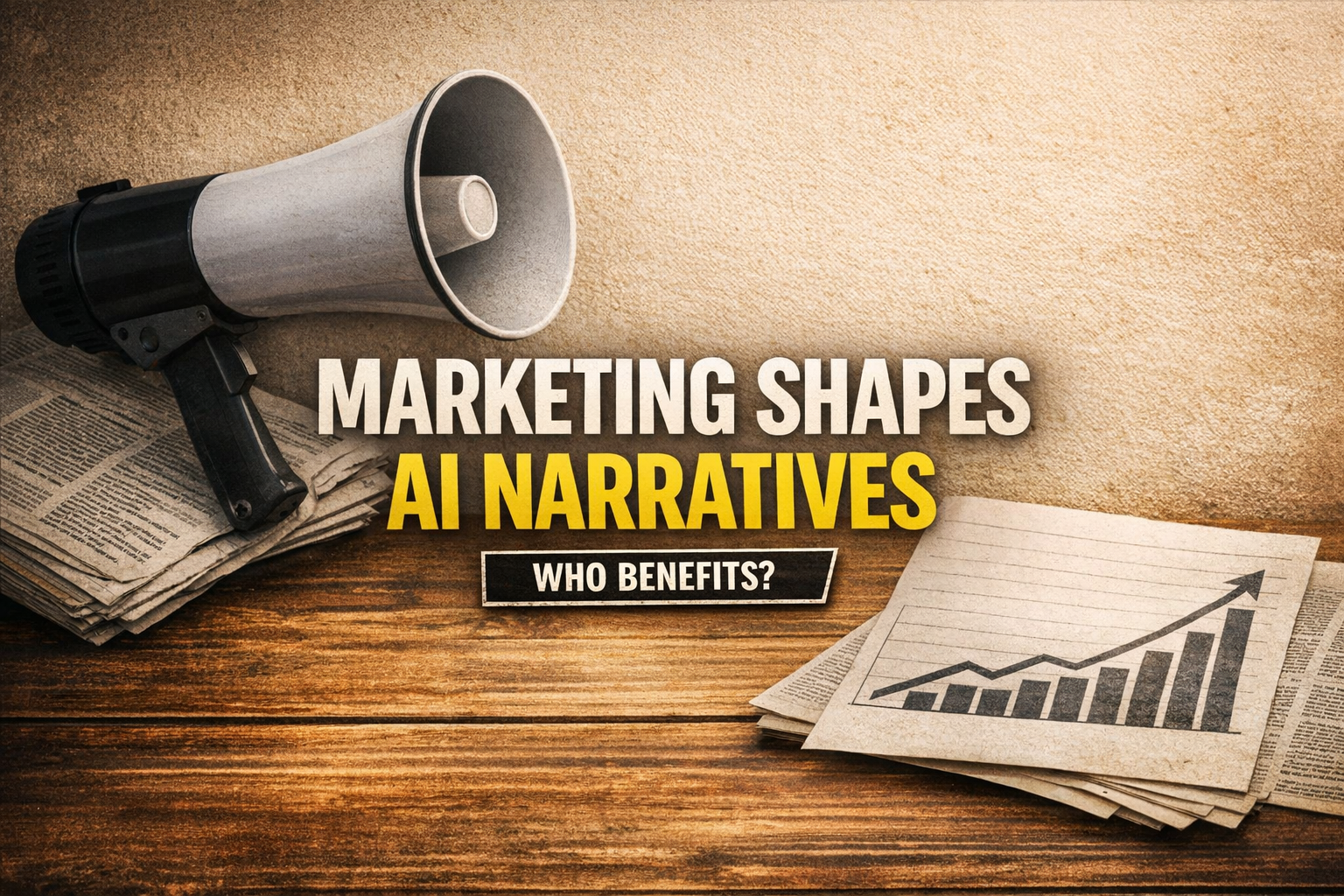
Artificial Intelligence is born from Marketing
In the summer of 1956, the promise to simulate human intelligence was enough to fund an eight-week research workshop for a group of computer science researchers. This endeavor created the brand, “Artificial Intelligence”. Despite the funding and the legendary participants, the mysteries of the human mind weren’t solved during that summer session.
Artificial Intelligence isn’t a single technology; it is a term broadly used for computation that extracts patterns from data. There is considerable power imbued in the language we use to talk about AI. The elusive promise of duplicating human cognition continues to capture the hearts (and wallets) of investors.
This pattern of promising breakthroughs in replicating human capabilities in short order is a hallmark of the field. As long as it continues to bring in the funding dollars without too many questions, why should we expect it to change?
When we see society altering claims casually tossed around by AI labs, we need to ask ourselves, “who benefits from this idea?” There are absolutely massive amounts of money flowing into AI firms that lose money at an unprecedented rate. Would investors tolerate this behavior if they weren’t led to believe a digital human replacement was right around the corner?
The link between AI and marketing claims is my first foray into laying out how I think about AI Literacy. My perspective is that AI Literacy is multidisciplinary and largely separate from AI Skiing and technical workforce preparation. I have lots more to get to. Let me know if you have questions or suggestions.



Hi Peter, Great topic! I guess the area I think about is music. Your Uncle Paul uses a thing called Band in a Box. He chooses tunes from this ap. (I think?) and plays along on his sax. He uses this to practice and to perform solo. He’s got these backing tracks (piano, bass, drums, etc.) that he plays along to. I know there are some musicians who record with an entire virtual orchestra. There are some who are concerned this will one day replace studio musicians, etc. To some extent this has already happened. Still, I’m not concerned. I’m convinced there will always be a demand for live music played on acoustic instruments. What are your thoughts?