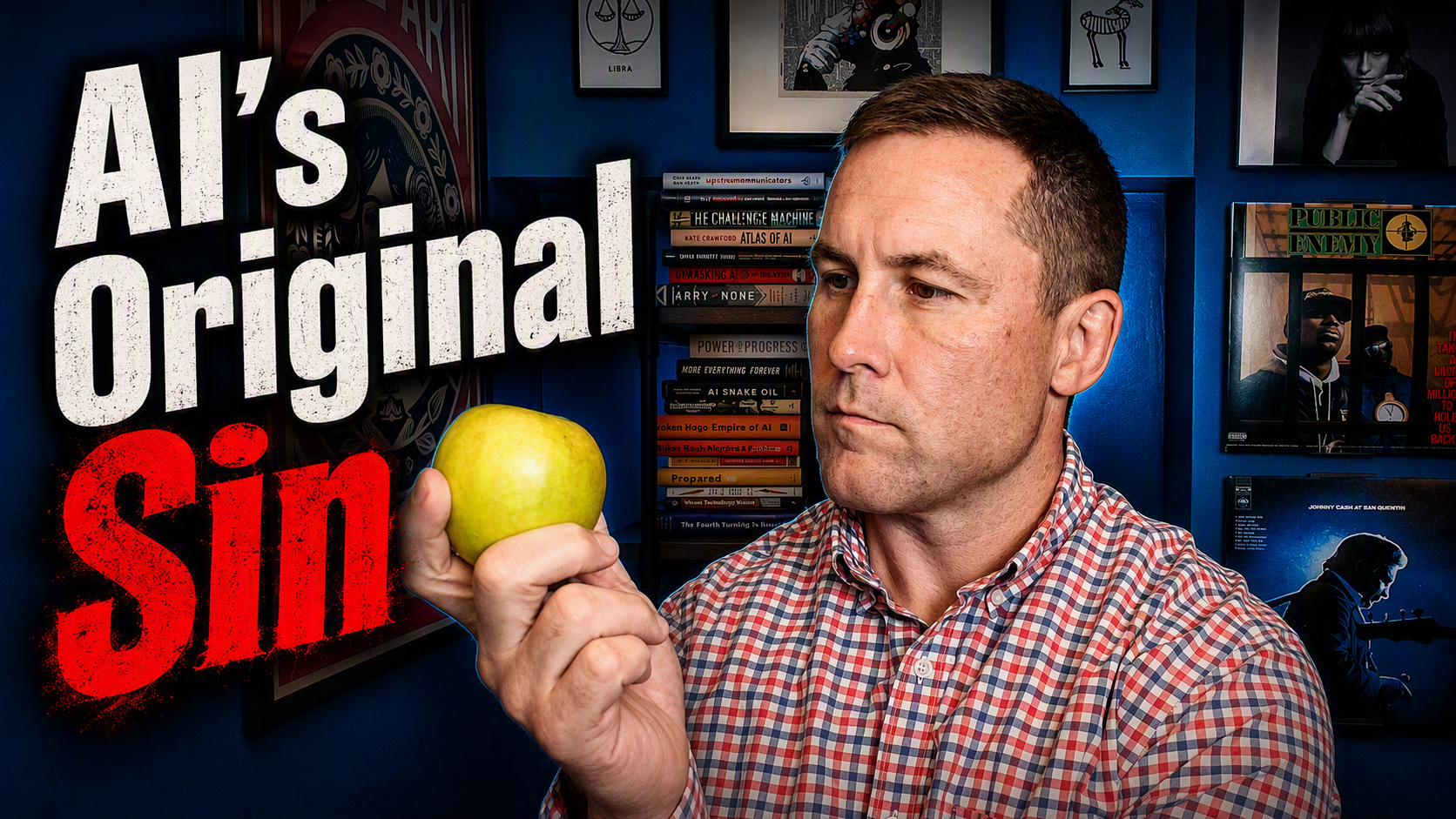
AI’s Original Sins
AI Ethics and Responsible AI are fields that attempt to make AI function in alignment with societal values. Or you could look at the goal as limiting the risk of harm being caused by AI-backed systems. The question I want to explore today is that can we ever truly have an “ethical” or “responsible” AI solution if the technology stands on an unethical foundation?
Ursula Le Guin’s The Ones Who Walk Away from Omelas describes a prosperous and utopian city with a small caveat that its existence depends on the perpetual misery of a single child. A purely utilitarian calculus might give us an equation showing the positive outcomes for the many minus the misery of one that results in a net positive number, justifying the situation. Not surprisingly, this utilitarian perspective is common among many in Silicon Valley today. But fortunately, that’s not the only way to evaluate justice.
Here are some of AI’s sins that we should examine:
- Non-consensual content
- Energy Consumption
- Resource extraction
- Localized pollution from datacenters
- Increasing the global cost of goods
- Ghost work
- Encoded bias
- Marketing myths
- Measuring intelligence and eugenics